18 November 2006
It was a sudden decision to go to Mymensingh. The place, being very close to Dhaka, Mymensingh is always in my list of short one-day-tour locations. The last time I visited Mymensingh was more than a year back in September 2005. So, it was a nice refreshing tour. The journey was a typical one from Dhaka. Not a lot to write home about. My bus started off by around 9:15AM and it took almost 3 hours to reach Mymensingh. But the view that I could get from the bus window is something that made my journey worthwhile before I could even reach there. A journey like that always holds the potential to refresh me for the busy week ahead.
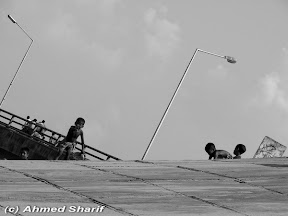
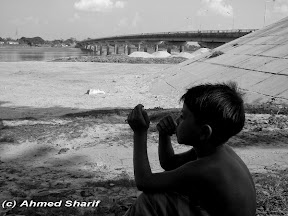
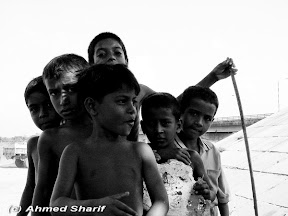
Even though it was the month of November and the winter breeze wasn’t too far away, the sun still wasn’t showing any signs of letting up. The day was warm and the bald and dusty banks of the Old Brahmaputra pushed me to look for cover. It was already past midday and the south bank of the river looked like a safer place to me at that hour of the day. There were some children playing around. They didn’t have school that day, which released them from any sort of restrictions. There were a couple of boys to start with. Soon they were joined by others and there was no short of enthusiasm. The slope of the bridge embankment became their favourite playing ground. It wasn’t quite like the Winter Olympics, but the slope was good enough for them.

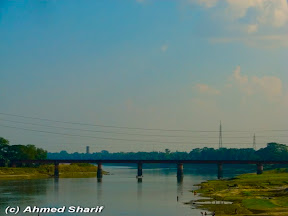
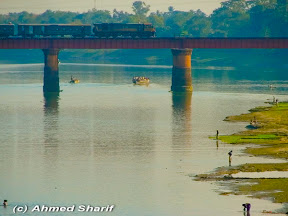
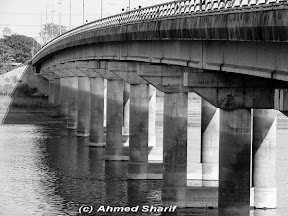
Winter was not quite here, but the time for the “kaash” was gone. They follow the rain and the wet seasons were already history. The river had died down considerably. Low waterlines exposed the battered pillars of the Shambhuganj Bridge. High marks on the pillars remind us of the ferocity of the river during the rainy season. Floods of 1988 and 1998 left crowning marks on the pillars like forensic evidence. The Shambhuganj Bridge is not a mighty bridge, but its not a tiny bridge either. The Chinese engineers helped build this during the early nineties. The other bridge across this river here is the rail bridge, built by the British. The old horse still carries on. The rail bridge is not too far from the Shambhuganj Bridge and can be reached after a nice tranquil boat ride. The river during this season is as calm as you can imagine. The water flow in the river was really tiny compared to what can be found during the rainy season. The canal-like flow left most of the river dry and sandy. The riverbed was full of trucks carrying sand.
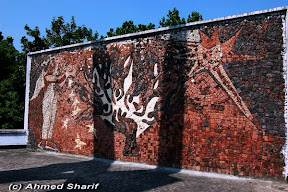
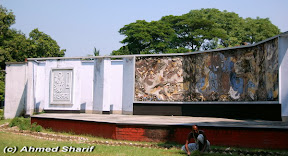
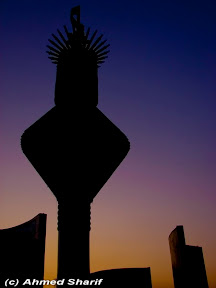
The southern end of the bridge has nice paved embankments which becomes sort of an entertainment spot for people during the milder afternoon times. A memorial on the Liberation War of 1971 stands on the right of the bridge’s southern end. This is also part of the afternoon entertainment package for people.
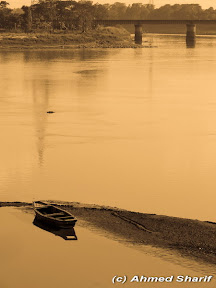

Buses were leaving Mymensingh for the northern part of the region. The bus terminal is right on the southern edge of the bridge. I finished my lunch at a restaurant near the bus terminal. It was around 2:30PM and the sun was still shining strong. I spent the whole afternoon on or around the bridge. Lots of activities revolve around the Old Brahmaputra. Though there were not too many commuters passing, the river was still an important way of communication, especially in terms of transporting construction materials. Some dredgers were also at work in the middle of the river. The river bank was being utilised by locals as bathing ground. For those people, hygiene comes a secondary requirement. Anyway, suffice it to say that the river, though half dry, is still part of people’s everyday life.
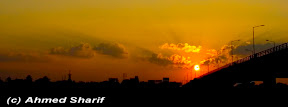
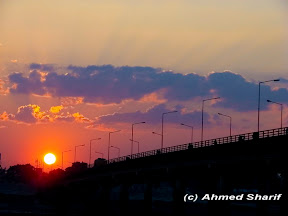
The Old Brahmaputra is always a picturesque river. The calm quiet nature of the river allows for some photography at a leisurely pace. The northern banks contained some sporadic rice-fields. The dried-out river bank wasn’t being utilised at all points, it seemed. The rest was being used as a casual grazing field for cattle. I crossed the length of the bridge on foot and reached the other bank. The sun was already well on its way down. And interestingly, the sun was going down almost on the southern end of the bridge. A great opportunity to photograph the bridge presented itself. This is the seasonal advantage of November. The summer months would see the sun go down far from the bridge. A bridge shot with the sun would be much more difficult in those circumstances.


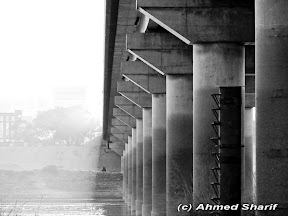

As said before, the bridge pillars were exposed because of the low water level. The pillars formed sort of a tunnel right underneath the bridge. This is not too obvious to people unless they really care to go under the bridge. This is of course not possible during the rainy season. The setting sun showed its colours on the water through the pillars. And I was also extremely privileged to see a rare light show through the sparse clouds above the setting sun. It made my day. I never expected to get such pictures of Shambhuganj Bridge before I actually got them. It was the gift of Nature; you never know when and where it would show up. You just have to be there at the right place, at the right time.
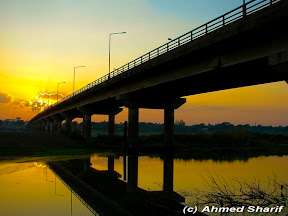


I missed the rare show of hundreds of bats flying around the Liberation War Memorial, a phenomenon stopped by the authorities because of the mess left by bat-droppings. I was still happy. I had a smile on my face when I boarded the return bus to Dhaka at dusk. It was short trip but nothing short of pure gain.