Rajshahi University is the second largest University in the country and the highest seat of learning in the northern region. The University has crossed 53 years of its foundation opening its door for the students with a solemn promise to spread quality higher education an research on July 6, 1953. Situated at the green square of Motihar, the main campus of the varsity is very close to the river Padma and three miles east from the Rajshahi City. (Rajshahi University Official Website: www.ru.ac.bd/)
The second largest university of Bangladesh, located 5 km north of the Rajshahi city. The recommendation for establishment of the university was made by the Sadler Commission formed by the Calcutta University in 1917 to conduct a feasibility study for a university for the students of the northern and southern regions of Bengal. The report of the Commission was shelved for long and only in 1953, the government of East Pakistan adopted the Rajshahi University Act 1953, which was published through a gazette notification on 16 June 1953. The Governor of East Bengal was the chancellor and Dr. Itrat Hossain Juberi, the Principal of Rajshahi college was appointed the first vice-chancellor of the university. He and a patron of learning Mr. Madar Baksh worked together to prepare a plan for the university. All intermediate and degree colleges and also the colleges of vocational and technical education of Rajshahi and Khulna divisions were affiliated to the newly established university. (www.banglapedia.org)
The university is now governed by the Rajshahi University Act 1973. According to the act, the President of Bangladesh is its chancellor and the activities of the university are regulated by the senate, syndicate, academic council, finance committee and other statutory bodies. The vice-chancellor is the executive head and he is assisted by pro vice-chancellor, treasurer, registrar, controller of examinations, and a set of other officers. (www.banglapedia.org)
The present campus of the university is at Matihar on 298.2 hectares of land acquired for the purpose. A master plan for the campus was designed by a foreign architect John A Zomanec and the construction of new buildings and structures started in 1958. The construction of the first phase to accommodate all offices and academic units was completed in 1964. At present, the university has two administrative buildings, a senate house, 8 academic buildings, 15 residential halls for students (4 for girls), residential houses for teachers and other staff (including separate houses for the vice chancellor and pro vice-chancellor), the central library building, central mosque, central auditorium, students' union building, medical centre, press, guest house and a cafeteria. Some institutes, special departments and facilities of the university are located within the campus and in the town and they include the Institute for Bangladesh Studies, the Department of Fine Arts, the University School and College, a rail station, the Barendra Museum and Barakuthi Building. A sculpture of the war of liberation, the Sabash Bangladesh and a Shaheed Minar has been erected at the campus. (www.banglapedia.org)
At the beginning (1954), the university had only 156 students (6 girls) and in 2001, the number of students stood at about 20,000. The university now has 804 teachers, 472 officers, and about 1,600 support staff. Degrees offered by the university include bachelors (honours) and Masters in different disciplines as well as M Phil, Ph D, diplomas and Certificates. The departments and institutes of the university have so far (2000) produced 168 M Phils and 289 Ph Ds. The physical education department of the university has 27 instructors, a 25,000-seat stadium, 2 gymnasiums, 1 swimming pool, 4 football grounds, 1 hockey ground, 4 tennis courts, 2 basketball courts and a squash court. (www.banglapedia.org)
Rajshahi University has a great role in all major historical movements of the country. The Pakistan army during the mass movement in 1969 killed Dr. Mohammad Shamsuzzoha, a Chemistry professor and the proctor of the university. During the War of Liberation they killed three other teachers: Habibur Rahman of Mathematics, Mir Abdul Quaiyum of Psychology and Sukhranjan Samaddar of Linguistics, 15 non-teacher employees and 9 students of the university. The name of the university is associated with many famous researchers and academicians who worked here in different capacities. Some of such people are Dr. Muhammad Shahidullah, Dr. Muhammad Enamul haq, Dr. AR Mallick and Dr. Abdul Karim. The university offered honourary D Lit to the French philosopher Andre Malraux in 1973. (www.banglapedia.org)

Road under the canopy.............
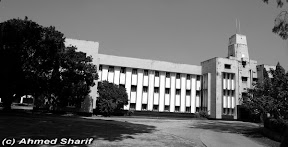
Administrative Building

Auditorium

Liberation War Memorial

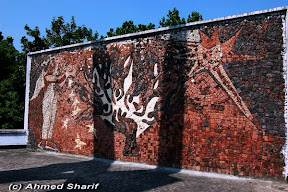

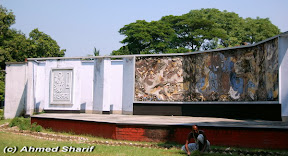

Mosque

Subarna Jayanti Tower (Golden Jubilee Tower)


Shabash Bangladesh


